
Jai Bhim is a Tamil courtroom drama that asks an uncomfortable question: what happens when the people expected to protect us become the source of injustice? Directed by T. J. Gnanavel, the film follows a family's struggle against custodial violence and the prejudice that makes their suffering easy to ignore.
Spoiler note: This review discusses the central case and its outcome. The film includes disturbing scenes of custodial violence.
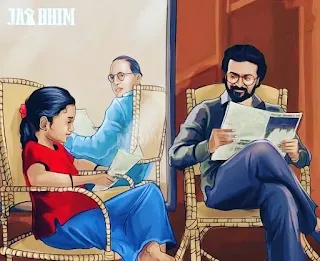
A family's search for justice
In the film, Rajakannu belongs to an Irular community and is arrested after being accused of theft. When he disappears from police custody, his wife, Sengeni, refuses to accept the explanations offered to her. She seeks the help of advocate Chandru, played by Suriya.
The search exposes a death in custody and an attempt to conceal it. The courtroom proceedings matter because a family has been denied something basic: a truthful account of what happened to one of its members.
Inspired by a real case, with changes for the screen
The story draws on a case handled by lawyer K. Chandru, who later became a Madras High Court judge. However, it is a dramatisation, not a documentary. Gnanavel explained that the community identity was changed for the film; the on-screen Irular identity should not be treated as a biographical fact about the real Rajakannu. The director's interview explains this distinction.
The injustice beyond the police station
My strongest takeaway is the connection between violence and everyday exclusion. Poverty, exploitation and limited access to education leave the family vulnerable long before the case reaches court. Prejudice makes it easier to accuse them and harder for their voices to be heard.
For viewers watching from the comfort of their homes, these scenes are a challenge to indifference. The people on screen deserve more than sympathy. They deserve dignity, safety and the same opportunities that others take for granted.
The title's association with Babasaheb Ambedkar gives that demand for equality a clear purpose. It asks us to consider how far the promise of an equal society reaches into everyday life.
Justice needs accountability
Chandru's role shows the importance of questioning an official account rather than accepting it simply because it comes from a position of authority. His investigation and courtroom arguments expose the falsehoods surrounding Rajakannu's disappearance.
Yet justice should not depend on every affected family finding an exceptional lawyer. The wider concern is police accountability: people need accessible, independent ways to report abuse, and complaints must be investigated seriously. A film can start this conversation; the responsibility to act continues beyond its ending.
Education, dignity and a lasting message
The question of education is equally important. Children from marginalised communities should have the opportunity to study and choose their futures without being asked to abandon their cultural identities.
For me, this is why Jai Bhim deserves discussion beyond its courtroom story. It makes a forceful argument that equality must be visible in how people are treated, whose suffering is acknowledged and who can seek justice. That is the thought the film leaves behind.